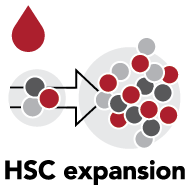
Our research program aims to decipher the basic mechanisms that regulate the activity of normal and leukemia stem cells with the ultimate goal of identifying regulatory networks that govern specification and self-renewal of these cells. Factors with potential clinical applications (e.g., those which enhance HSC self-renewal in the form of recombinant proteins or new chemical tools) are further studied and developed into clinical products with the help of several national and international collaborators through our established pipeline in HSC expansion. 
We have historically focused our interest on 2 broad families of regulators, the Hox genes and their co-factors (Meis-Pbx) and their upstream regulators, the Polycomb Group (PcG) genes. More recently we extended our interest to study additional nuclear factors and chromatin modifiers (e.g., histone demethylases) which govern the activity of normal and leukemia stem cells. Our approach remains to focus on the development of novel functional genomics methods that are exploited to identify uncharacterized regulators of stem cell specification and self-renewal.

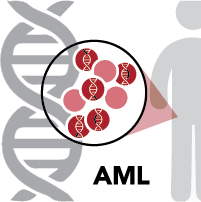
For studies involving leukemia stem cells, we have focused on those in which Hox gene expression is deregulated (e.g. a large subgroup of normal karytope human AML). To achieve these goals, my laboratory has developed 5 research programs, 1 of which is translational. These programs are supported by various Canadian and US funds (see research projects section).